Claude Code cost per month is your subscription charge plus any usage credits, or your metered API bill if you authenticate with an API key. Do not add the API-priced session estimate shown in /usage to a Pro or Max subscription: Anthropic says that number is an estimate, not an extra subscriber charge. The pricing comparison compares payment models; this article builds one developer's monthly budget from actual working days. Pricing and product behavior were checked October 9, 2026.
Key takeaways
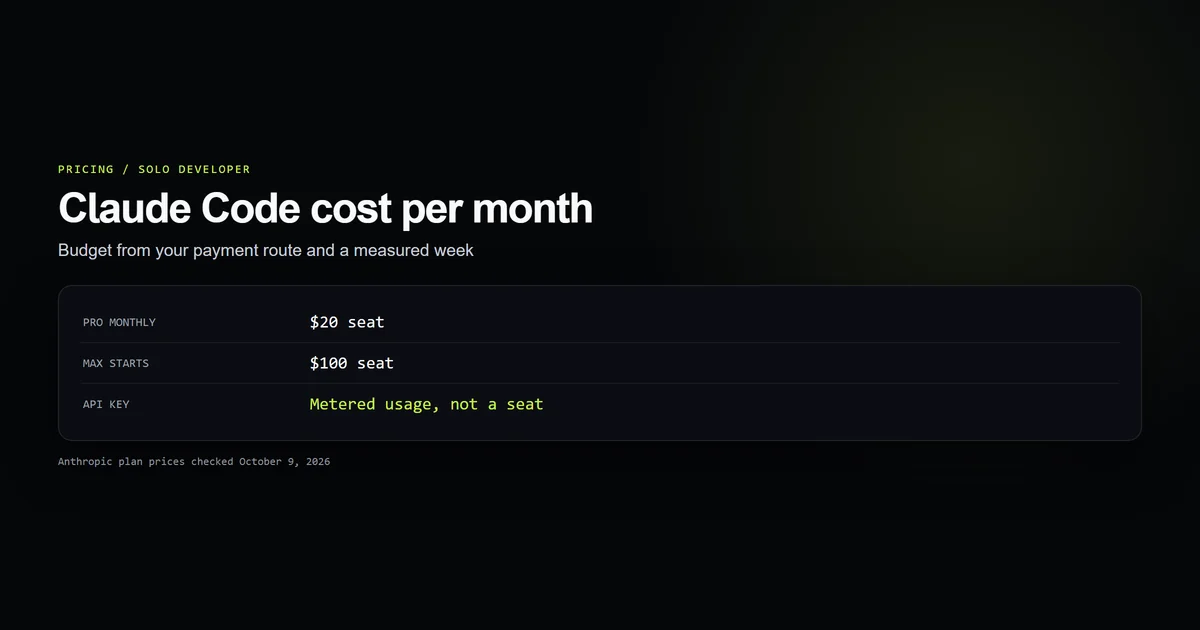
- Claude Pro is $20 per month on monthly billing; Max starts at $100 per month, according to Anthropic's pricing page checked October 9, 2026.
- A subscription price is a floor for the plan, not a promise that every workload fits its usage limits.
/usagepresents separate session, plan, and usage-credit views. Read the one that matches your payment route.- Twelve executions of one fixed task in this site's September 2026 experiment varied 12.92-fold in API cost, so one run is not a monthly forecast.
The monthly cost equation
Use the equation for the account you actually run:
| Payment route | Monthly amount to budget | Authoritative record |
|---|---|---|
| Pro or Max, no usage credits | Subscription price | Subscription billing page and plan usage |
| Pro or Max with usage credits | Subscription price + credits consumed | Billing page and /usage credits row |
| API key | Sum of metered API charges | Claude Console Usage page |
Anthropic's cost documentation says /usage computes its session dollar figure locally from token counts and list prices, unless an organization supplies contracted model prices. The Claude Console is authoritative for API billing. Since Claude Code 2.1.211, /clear resets the session total; summing screenshots of session totals can therefore miss usage or count it twice.
This boundary matters more than a rate-card table. A subscriber can see a session estimate while paying only the seat price. An API-key user can see a low single-session estimate while many sessions accumulate into a meaningful monthly charge.
Measure a working week
Record five to seven ordinary workdays. For each day, capture the payment route, model, number of completed tasks, /usage plan bars or API charges, and any usage credits. Include the day spent debugging a stubborn failure; excluding it produces a best-case estimate.
Subscription route: monthly seat + measured weekly credits × 4.3
API route: measured weekly API charges × 4.3
Buffer: add the largest observed daily overage you can tolerate
The multiplier 4.3 converts a weekly sample to an approximate month; it does not correct for a launch week or a holiday. Re-measure when you change model, repository, agent configuration, or the volume of automated tasks. If you use multiple devices, Anthropic says the local /usage attribution view does not include activity from other devices; use the billing record for the total.
Why one task price fails
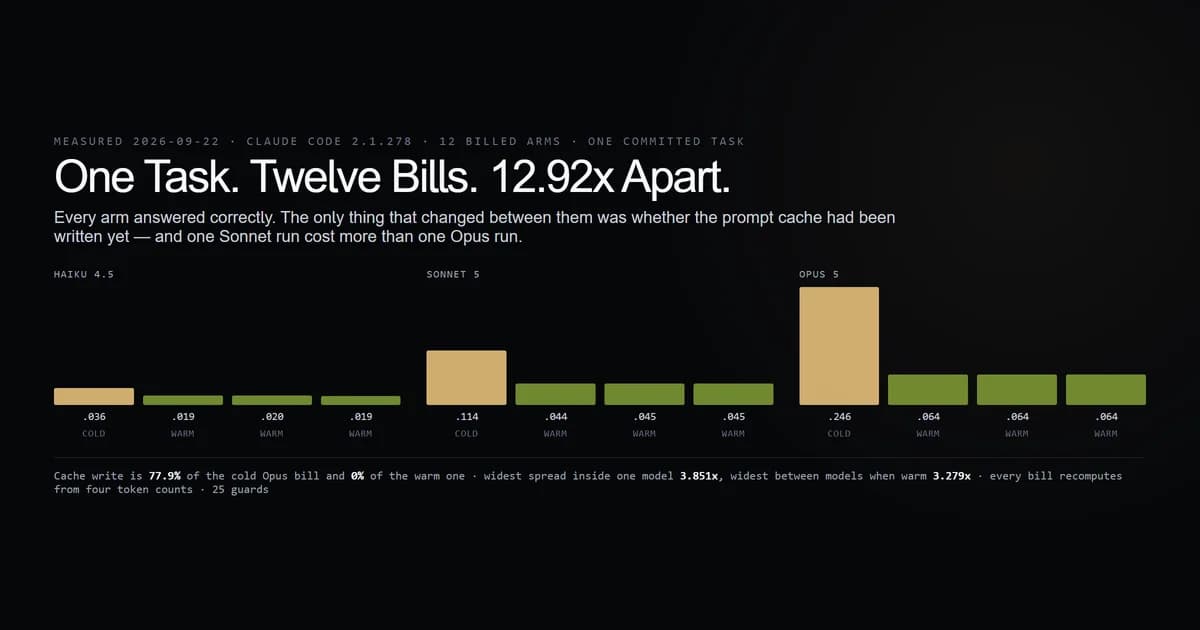
Our fixed-task price experiment billed twelve runs of the same job between $0.019026 and $0.245787. The task and success criterion were held fixed. Cache state and execution path changed the bill. That 12.92-fold range is evidence against multiplying one attractive demo price by your expected monthly task count.
Our separate August transcript audit saw 20,285 assistant turns across 92 sessions, but only eight sessions carried a price record. We do not extrapolate those eight to a universal monthly cost. Anthropic reports an enterprise average of about $150–$250 per developer per month in its Claude Code cost guide; that is a population-level reference, not a forecast for a solo subscriber.
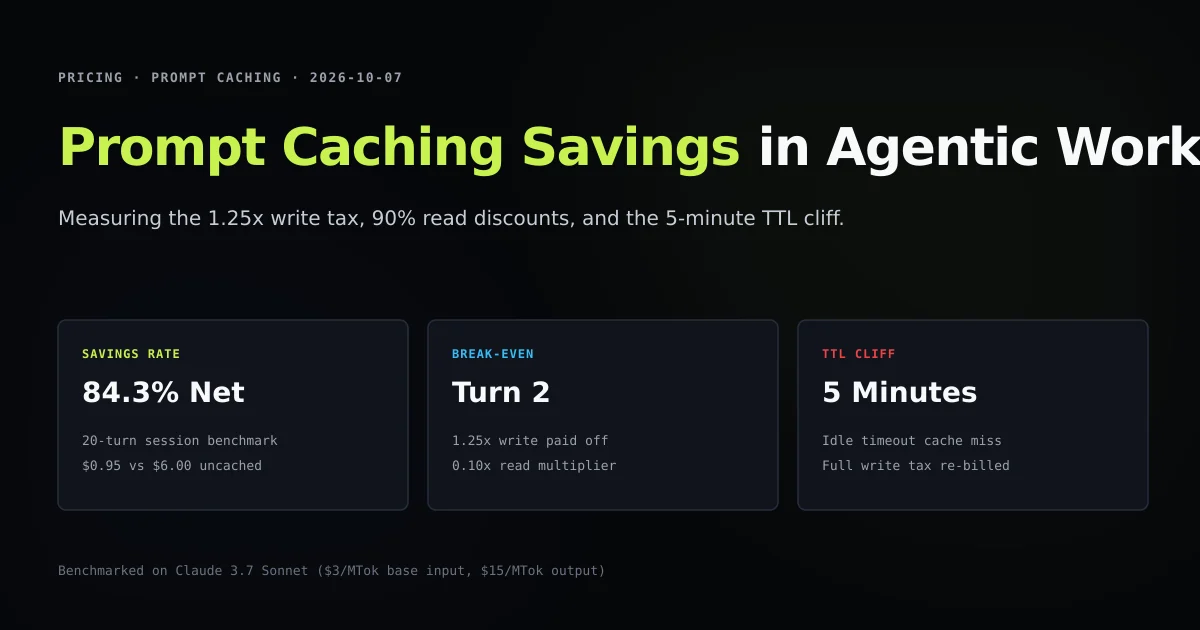
For a useful estimate, keep the median day and the expensive day. If your budget cannot absorb the expensive day, set a lower usage-credit limit or choose a payment route with a predictable ceiling. Our prompt-caching analysis explains why the same task can have a different input bill when its cache is cold.
Choose a payment route
Choose Pro if its limits let you finish a normal week and you value a fixed monthly seat. Consider Max only after you have measured repeated interruptions from plan limits; its $100 starting price is five times Pro's monthly $20 price as checked October 9, 2026. With an API key, pay for what the models consume and set a budget in the Console. Compare completed work per dollar, not token counts alone.
If usage credits are enabled, set a monthly spend limit you can afford before the first overage. The current /usage interface reports credits consumed against that limit for Pro and Max accounts. Revisit the limit after a week of actual work.
Best practices
Freelancers who need to allocate that measured month across jobs can use the aggregate client-budget method. It separates the invoice from API-equivalent workload.
- Classify your account first. The session dollar estimate means different things for subscribers and API users.
- Capture a complete week. It includes cache misses, debugging loops, and quiet days.
- Track completed tasks. A cheaper run that requires a second attempt may cost more in total.
- Set an overage limit. This turns a forecast error into a controlled decision.
Common mistakes
- Adding
/usagesession estimates to the Pro fee. The estimate uses API-style accounting; inspect credits and billing instead. - Pricing from one warm run. A cold cache or longer search changes the result; keep a range from several days.
- Calling a seat unlimited. The plan has usage limits; the symptom is interruption during a normal week. Measure first, then consider another tier.
Conclusion
Start with the payment route, then measure a representative week. A solo developer with no overages can budget the subscription price; one using credits must add actual credit spend; an API-key user must use metered charges. Keep a high-day buffer because a fixed task can vary widely. If the measured bill is too high, follow the token reduction guide before paying for a larger tier.
Frequently asked questions
How much does Claude Code cost per month for one developer?
Does the cost shown by /usage add to my Claude Pro bill?
Can I estimate a monthly bill from one Claude Code task?

Muhammad Kashif
Founder and editor of Devventa, covering AI coding assistants, Next.js and the modern AI development stack.